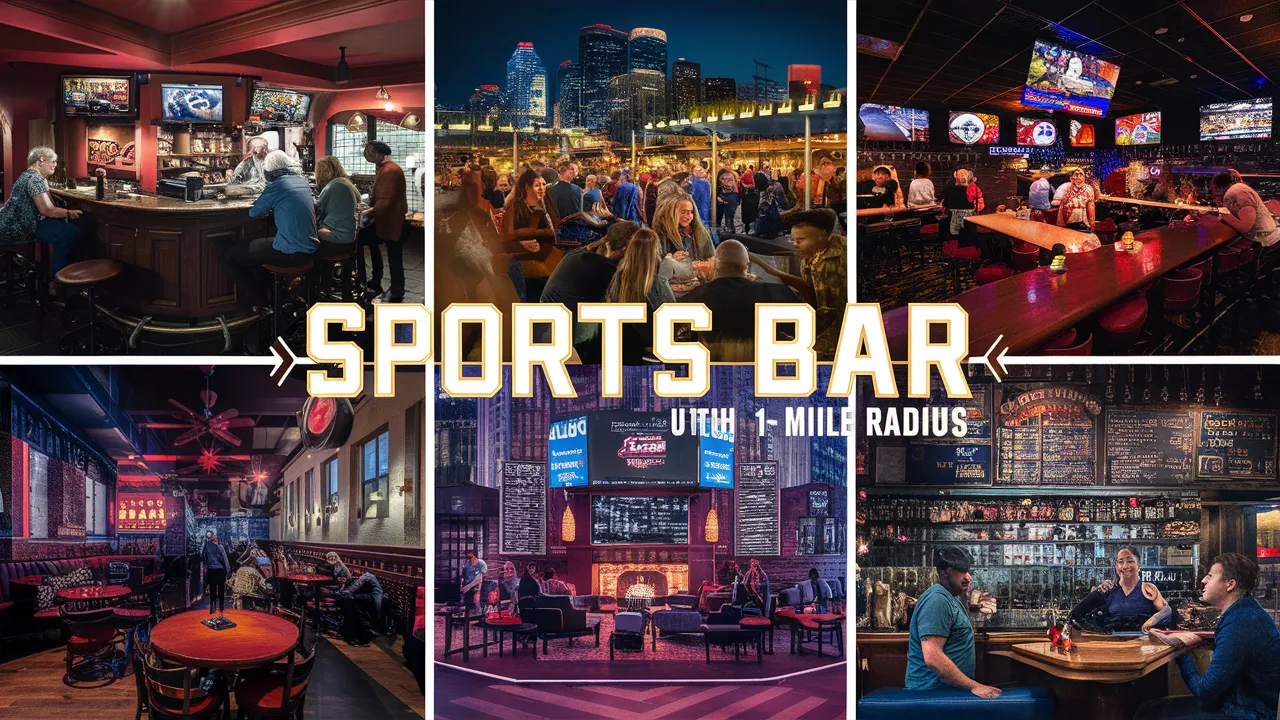

There’s something oddly specific about typing sports bars near me within 1 mi into a search bar. It doesn’t feel like planning. It feels like instinct. Like you’re not trying to discover a place—you’re trying to find the closest version of energy that already exists around you.
And maybe that’s what makes this search phrase so interesting in the first place. It’s not about tourism or exploration. It’s about immediacy. A game is on. People are gathering. You want in, but not across town, not after a long commute, not after the moment has already passed.
In many ways, sports bars within a tight radius of your location represent something very modern about how we socialize. Fast decisions. Local gravity. Shared screens replacing shared stadiums. And a kind of informal ritual that repeats itself every weekend, sometimes even weekdays, without much planning.
What stands out is how these places don’t really announce themselves during the day. They sit quietly in the background of a street—lights off, chairs stacked, nothing particularly loud. And then evening arrives, and suddenly the same space becomes something completely different.
Background and Origins of the Modern Sports Bar
Sports bars, as a concept, didn’t begin as polished entertainment spaces. They started as something much more casual—pubs, taverns, corner bars where televisions slowly became part of the furniture.
At first, showing a game was almost accidental. A screen was added so customers could stay longer. Then another screen was added because more people came. And gradually, it became clear that the sport itself had become part of the product.
Interestingly, this shift wasn’t driven by architecture or design trends. It was driven by behavior. People didn’t just want to drink or eat—they wanted to watch together. The social energy of live sport started to matter as much as the sport itself.
Over time, the “sports bar” became its own category. Multiple screens. Structured seating. Sound systems calibrated for crowd reactions. Even menus adjusted around long stays instead of quick visits.
That said, the most interesting evolution is the hyper-local one. The idea that you don’t need a famous venue or destination spot—you just need something nearby. Within walking distance. Within that small 1-mile radius where convenience meets impulse.
That’s where the modern version of sports bars near me really comes alive.
How the Concept Works in Real Life
On paper, a sports bar is simple: screens, seating, food, drinks, and live sports. But in real life, it behaves more like a temporary community space that forms and dissolves based on fixtures and schedules.
You don’t enter a sports bar and immediately experience it fully. There’s a transition period. The lighting feels different. The sound of commentary mixes with conversation. The energy builds slowly, depending on how intense the match is.
What’s interesting is how flexible these spaces are. On a quiet afternoon, they feel almost like cafés. Later in the evening, they transform into something closer to collective viewing halls. And during big matches, they become loud, reactive, emotional environments where strangers briefly behave like a group.
A regular visitor once described it simply: “You don’t go there to watch alone. Even if you’re alone, you’re not alone.”
That sentence captures the core logic of sports bars near me within 1 mi. They’re not just about proximity. They’re about shared presence without coordination.
Everything is designed around the assumption that people will arrive at different times, stay for different durations, and still somehow experience the same emotional arc of the game.
What Visitors Actually Experience
The experience of a sports bar is rarely about one thing. It’s layered. You notice different things depending on when you arrive, who you’re with, and what match is playing.
At first, it’s sensory. Screens everywhere. Sudden cheers. The rhythm of glasses on tables. Someone reacting loudly to a missed opportunity on screen as if it happened in the room itself.
Then it becomes social. You start noticing conversations between strangers. Small comments about players. Shared frustration. Unexpected celebration. The kind of interaction that would feel strange anywhere else but feels normal here.
What stands out is how quickly people bond over something temporary. You might not know the person next to you, but for ninety minutes, you share the same emotional timeline.
In many ways, sports bars compress social connection into short bursts. No long introductions. No background context. Just shared attention.
And then there’s the in-between moments—the pauses in the game. That’s when the space shifts again. Conversations expand. People check phones. The energy dips slightly but never disappears.
It’s not a restaurant. It’s not a stadium. It sits somewhere in between, shaped by rhythm rather than purpose.
Family, Friends, and the Social Culture Around It
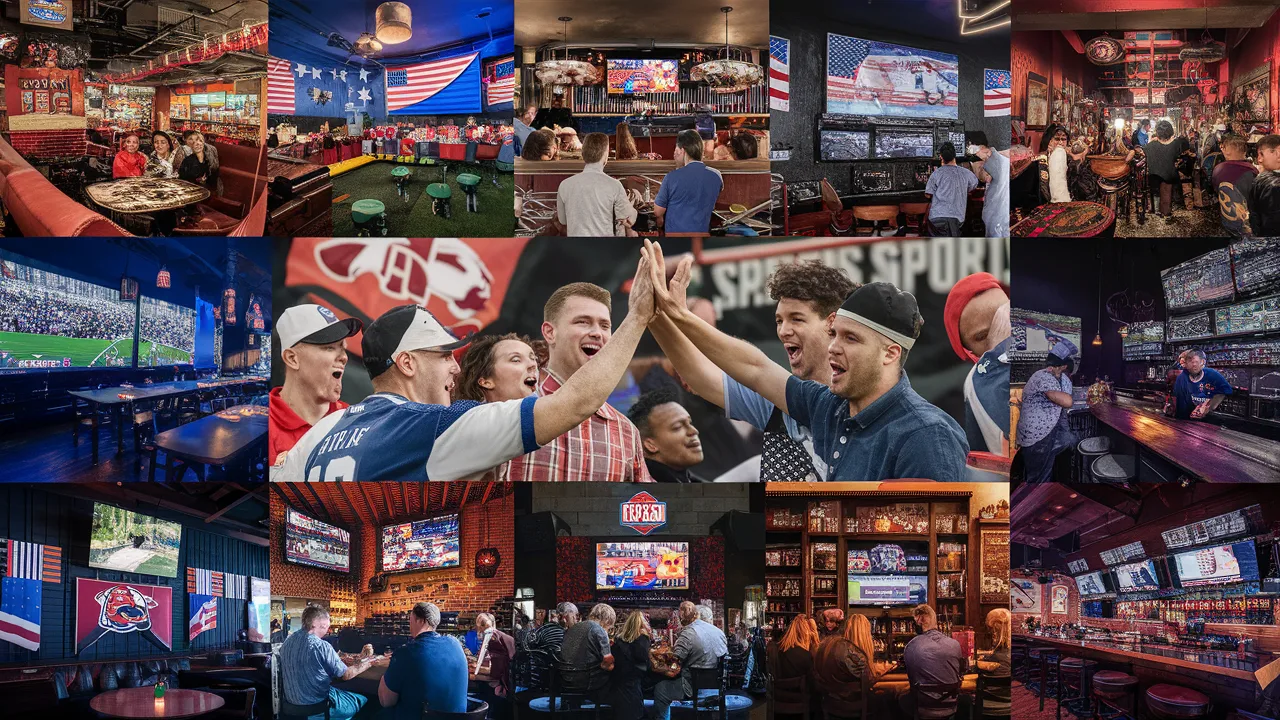
Sports bars within a short radius often become unofficial meeting points for friend groups. Not planned events, but default options. Someone suggests it, others agree, and suddenly it becomes a habit.
Friends don’t always sit still in these places. There’s movement—between tables, between screens, between groups. The structure is loose enough to allow constant repositioning.
Families appear too, though usually in more controlled hours or specific matches. It’s less about noise and more about shared viewing. A child watching a game with a parent. A moment of explanation during halftime. A small tradition forming without announcement.
Interestingly, sports bars also create a kind of mixed social environment that doesn’t exist in many other places. Strangers sit closer than they normally would. Emotional reactions are public. Celebration becomes collective even among people who just met.
One visitor described it in a simple way: “It’s like everyone agrees to care about the same thing for a while.”
And that agreement, unspoken as it is, is what holds the space together.
Why People Keep Coming Back
The repetition of visits to sports bars near me within 1 mi isn’t accidental. It’s built on convenience, yes, but also on emotional reliability.
People return because the experience is consistent. You know what you’re walking into, even if you don’t know the outcome of the game. The environment delivers a familiar kind of energy every time.
That said, familiarity doesn’t mean sameness. Each match brings its own tone. A close game feels different from a one-sided one. A local rivalry changes the entire room. Even the same space can feel completely different depending on the crowd.
There’s also the practical side. You don’t need planning. You don’t need reservations in most cases. You just show up.
In many ways, that simplicity is the real attraction. Modern life is full of planning, scheduling, and coordination. Sports bars remove that friction. They offer instant participation in something already happening.
A regular might put it bluntly: “It’s the easiest way to feel like you did something social without organizing anything.”
And that ease becomes addictive over time.
Role in Modern Entertainment Lifestyle
Sports bars are no longer just viewing spaces. They’ve become part of how urban entertainment works at a local level.
Streaming has changed how people watch sports individually, but sports bars have done the opposite—they’ve preserved the collective experience. Even as technology made viewing private and personal, these spaces made it public again.
What’s interesting is how they sit between digital and physical culture. You might check scores on your phone, follow stats in real time, or react to highlights online—but the emotional peak still happens in a physical room with other people reacting at the same time.
That contrast is important. It explains why sports bars near me within 1 mi still matter in an age where everything is available at home.
They provide something screens alone cannot: shared reaction.
And shared reaction is still one of the most powerful forms of entertainment.
Future of Local Sports Bars
Looking ahead, sports bars are unlikely to disappear, but they will evolve. The core idea—shared viewing—will stay, but the environment may become more flexible.
We might see smaller, more modular spaces. Hybrid cafés that shift between workspaces and viewing lounges. More integration with digital ordering and personalized viewing experiences.
But the real future challenge is not technology. It’s attention.
As entertainment becomes more fragmented, the role of a sports bar might become even more important as one of the few remaining places where attention is collectively focused on a single event.
That said, the best versions of these spaces will likely be the ones that resist over-complication. The ones that stay simple: screens, people, noise, reaction.
Because at its core, that’s all it ever needed to be.
Frequently Asked Questions
What does “sports bars near me within 1 mi” mean?
It refers to searching for sports bars located within a very short distance from your current location.
Why do people prefer nearby sports bars?
Convenience, quick access, and the ability to join live games without planning long travel.
What happens inside a sports bar?
People watch live sports on screens, socialize, eat, and react collectively to games.
Are sports bars only for groups?
No, individuals also visit them and often end up engaging socially with others.
Why are sports bars still popular today?
Because they offer a shared viewing experience that home streaming cannot replicate.
Do all sports bars show the same games?
Not always. Most prioritize popular matches, but selection varies by venue.
Conclusion
Sports bars near me within 1 mi are not really about distance. They’re about immediacy of experience. The ability to step out of your routine and into a shared emotional space without planning or effort.
And maybe that’s why they persist, even in a world where almost everything can be streamed alone. Because watching a game is one thing—but reacting to it with strangers who suddenly feel familiar, even for a short time, is something else entirely.