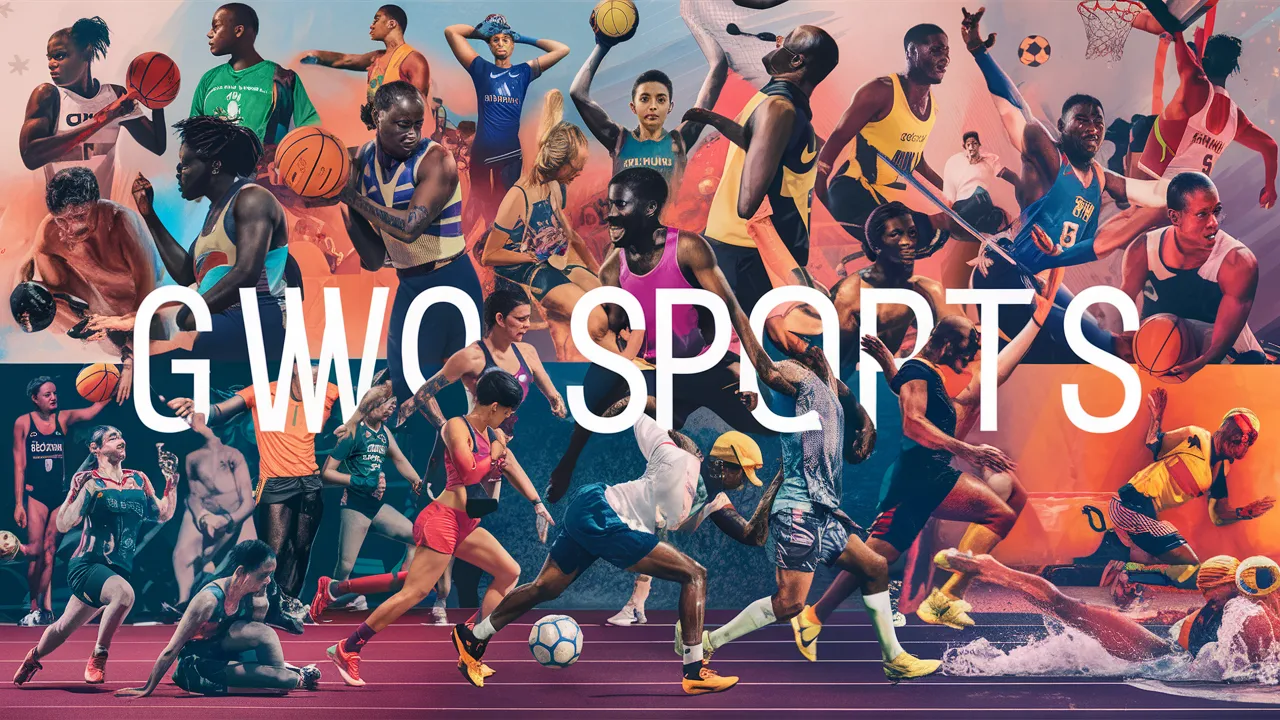

There’s a certain kind of sports culture that doesn’t always make headlines. It’s not always about stadium crowds or televised tournaments or names everyone recognizes instantly. Sometimes it exists in smaller ecosystems, in structured communities, in regional competitions, in training environments that quietly shape athletes long before the world ever notices them.
GWOC Sports sits in that in-between space.
It sounds simple on the surface, almost administrative in tone, like a label on a system or a framework rather than something emotional. But when you look closer, it starts to represent something more layered. A structure. A pathway. Sometimes even a stepping stone that decides who continues and who fades out.
Interestingly, GWOC Sports doesn’t feel like a single story. It feels like many small stories happening at the same time, loosely connected by competition, discipline, and repetition. And that’s where its real identity begins to form—not in spectacle, but in structure.
Background and Origins of GWOC Sports
To understand GWOC Sports, you almost have to step away from the idea that sports always begin with glamour. Most systems like this don’t start that way. They begin with organization—groups of schools, regional leagues, training clusters, or competitive associations trying to bring order to talent.
GWOC Sports, in that sense, feels like a framework built out of necessity more than design. A way to organize competition, track performance, and create consistent standards across participants who might otherwise remain disconnected.
What stands out is how these systems often grow quietly. There’s no dramatic launch moment. No single event that defines their origin. Instead, they evolve through participation. A match here, a season there, small improvements in structure over time.
In many ways, GWOC Sports represents the less visible backbone of athletic development. The part people don’t always talk about, but almost everyone passes through in some form if they stay in competitive sport long enough.
That said, these systems matter more than they get credit for. They decide match flow, ranking logic, scheduling patterns, and sometimes even the emotional rhythm of athletes who operate within them.
And that rhythm can become a lifestyle before it ever becomes a career.
How the Concept Works in Real Life
On paper, GWOC Sports is straightforward: organized competition, structured leagues, defined participation rules. But in reality, it behaves more like a living system than a fixed structure.
Teams enter seasons with expectations that are rarely stable. Performance shifts week by week. A strong start doesn’t guarantee anything. A weak start doesn’t end anything. Everything stays in motion.
What’s interesting is how quickly participants adapt to that uncertainty. Athletes, coaches, even supporters begin to understand that consistency matters more than isolated success.
A coach might say something simple like: “You don’t win GWOC in one game. You just survive it week after week.”
That sentence captures the emotional truth behind the structure.
And there’s also something subtle about repetition. Matches, training, review cycles—they start to blend together. Not in a boring way, but in a conditioning way. Athletes begin to live inside a rhythm that is both predictable and constantly demanding.
That rhythm becomes the real “system” behind GWOC Sports.
What Athletes and Participants Actually Experience
From the outside, GWOC Sports might look like a clean structure of fixtures and results. But inside it, the experience is far more textured.
For athletes, it often feels like a long conversation with pressure. Not the loud kind of pressure, but the consistent kind. The kind that shows up in every training session, every pre-game warm-up, every post-match review.
Some describe it as steady tension. Not overwhelming, just always present.
A participant once said something like: “You don’t really relax during the season. You just adjust.”
And that adjustment becomes part of identity.
There’s also the emotional layering. Wins feel meaningful but temporary. Losses feel heavy but educational. Over time, both start to feel like part of the same process rather than separate outcomes.
What stands out is how athletes grow within this system. Not just physically, but mentally. Decision-making becomes sharper. Patience becomes necessary. Ego gets tested more than once.
And yet, despite the intensity, there’s also familiarity. You begin to recognize opponents, venues, routines. It becomes a world within a world.
Family, Friends, and Social Culture Around It
GWOC Sports doesn’t exist only on the field. It extends into homes, group chats, sidelines, and everyday conversations that revolve around performance, results, and expectations.
Families often become silent participants in the system. They track progress, attend events, adjust routines around schedules. Over time, they develop their own emotional relationship with the competition.
Friends talk about it differently. More casually, sometimes critically, sometimes passionately. Results become conversation points. Performances become shared reference points.
Interestingly, even people who are not deeply involved in sports begin to recognize the rhythm of GWOC-style competition once someone close to them is part of it. It starts shaping weekly life more than expected.
One parent described it in a simple way: “It feels like the season becomes part of your calendar whether you want it or not.”
That’s probably the most accurate description.
Because GWOC Sports doesn’t stay contained. It expands into daily life in quiet, consistent ways.
Why People Keep Coming Back

The persistence of systems like GWOC Sports is always worth examining. Because on the surface, it can seem demanding, repetitive, even exhausting.
But people return for a reason.
For athletes, it’s development. The system forces growth whether they feel ready or not. It creates structure around improvement, even when motivation fluctuates.
For supporters, it’s continuity. Once you’re invested in a team or a season, you stay because leaving feels like breaking a narrative mid-way.
That said, there’s also familiarity. Over time, GWOC Sports becomes something predictable in a life that may not be. Matches happen. Seasons progress. Patterns repeat.
And in a strange way, that predictability becomes comforting.
A long-time follower might say: “Even when things change, the schedule doesn’t.”
And that stability is often enough to keep people engaged.
Role in Modern Entertainment and Youth Culture
GWOC Sports also reflects something bigger happening in modern sports culture. The shift from isolated competition to structured systems of continuous engagement.
Today, sports are no longer just events. They are ecosystems. Everything is tracked, logged, analyzed, and compared. GWOC Sports fits into that transformation naturally.
What’s interesting is how this changes motivation. Athletes don’t just play for a single game anymore. They play within a system that evaluates long-term performance. Every match becomes part of a larger story.
This also changes how audiences engage. Fans are no longer just spectators. They become followers of progression. They track development arcs rather than isolated outcomes.
In many ways, GWOC Sports becomes part of a lifestyle rather than just a competition format.
It blends into identity—especially for younger athletes who grow up inside these systems rather than joining them later.
And that makes a difference in how they see sport itself.
Future of GWOC Sports Systems
Looking ahead, GWOC-style systems will likely become even more structured and data-aware. Performance tracking will deepen. Scheduling will become more adaptive. Communication between teams and organizers will become more seamless.
But there’s also a question underneath all of this: how much structure is too much structure?
Because while organization improves efficiency, it can also reduce spontaneity. And sport, at its core, still depends on unpredictability.
That tension will likely define the future of systems like GWOC Sports.
Some environments will move toward even tighter systems. Others may push back and reintroduce flexibility.
The balance between control and chaos will remain central.
And GWOC Sports, whether it evolves or stays stable, will continue sitting right in that middle space.
Frequently Asked Questions
What is GWOC Sports?
It refers to an organized competitive sports structure that manages leagues, matches, and athletic participation within a structured system.
Is it a professional-level system?
It can include multiple levels, but it is often associated with structured competitive development rather than elite-only competition.
Why is it important for athletes?
It provides consistent competition, development pathways, and performance tracking.
Does it affect daily life?
Yes, especially for athletes and families involved, as schedules and routines often revolve around it.
Is it only about winning?
No, it also focuses on development, consistency, and long-term growth.
Why do people stay involved?
Because it offers structure, progression, and a clear competitive pathway over time.
Conclusion
GWOC Sports is not just a system of games or schedules. It is a rhythm that athletes move through, sometimes consciously, sometimes without realizing it. It shapes discipline, expectation, and even identity in subtle ways.