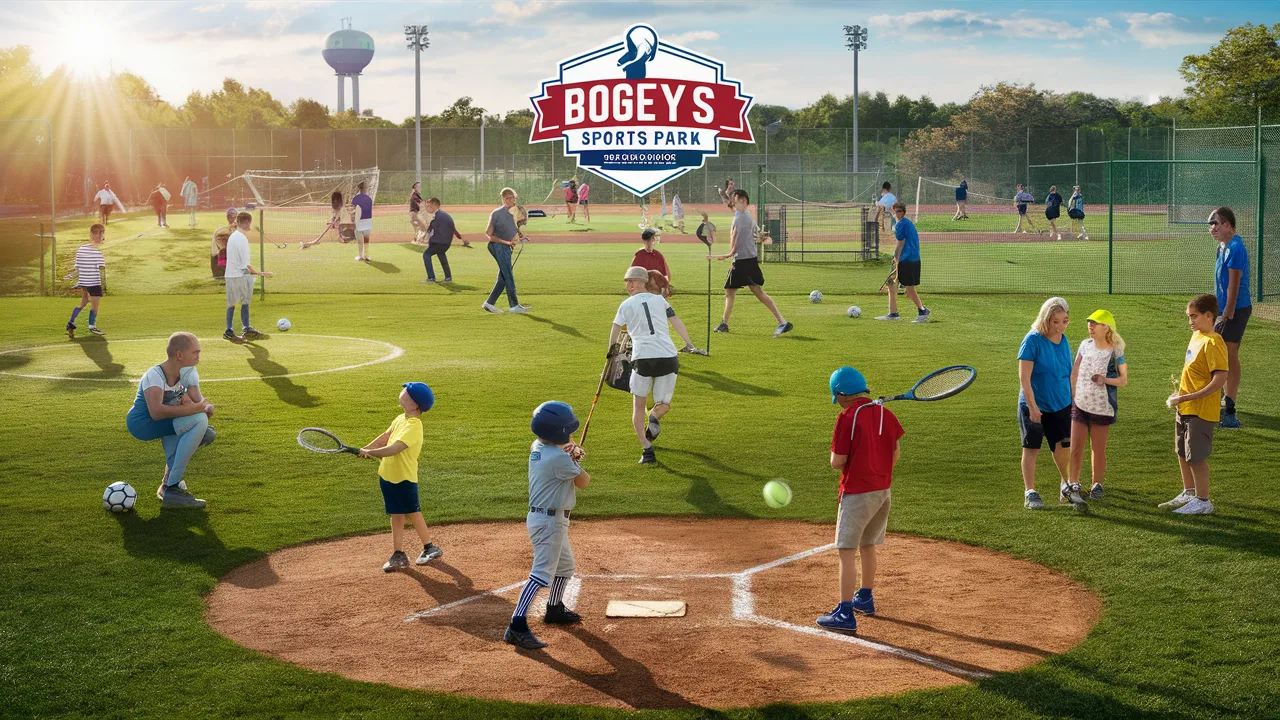

It’s funny how places like Bogeys Sports Park don’t announce themselves as anything important at first. You arrive expecting a casual outing, maybe a bit of activity, maybe some time-killing with friends or family. Nothing serious. But then you stay longer than planned. You notice the rhythm of the place. The way people move between spaces without urgency. The way nobody seems in a rush to prove anything.
And that’s where it starts to feel slightly different.
What stands out is not one specific activity or feature, but the atmosphere itself. It’s loose, almost unstructured in a way that feels intentional without actually trying to feel intentional. People talk, play, pause, wander off, come back. It’s not a performance space. It’s more like a shared pause in the middle of otherwise busy routines.
In many ways, Bogeys Sports Park sits in that growing category of places that blur lines—between sport and leisure, between activity and relaxation, between being alone and being social. And whether you notice it immediately or not, that blend changes how you experience time there.
Background and Origins of Bogeys Sports Park
There’s rarely a single clear origin story for places like Bogeys Sports Park. It didn’t emerge from a dramatic founding moment or a carefully packaged idea. It feels more like something that evolved with time, shaped by how people’s habits slowly changed.
Traditional sports spaces used to be very defined. You went there for training, competition, or structured play. Leisure spaces, on the other hand, were separate—parks, arcades, cafés, gyms. Each had its own purpose. But over the last decade or so, that separation has blurred quite noticeably.
Bogeys Sports Park belongs to that shift.
Interestingly, its identity seems less about inventing something entirely new and more about combining familiar things in a way that feels less rigid. A bit of sport, a bit of casual gaming, a bit of open social space. Nothing overly complicated. Just layered in a way that allows people to decide how they want to use it.
That said, what makes it stand out is not the concept itself—it’s the execution. Many places try to be multi-purpose and end up feeling scattered. Bogeys Sports Park, at least in how people describe it, seems to hold a kind of informal balance. Not perfect. Just comfortable.
And maybe that’s the point.
How the Concept Works in Real Life
On paper, “sports park” can sound quite structured. But in reality, Bogeys Sports Park operates more like a fluid environment than a fixed destination.
There’s usually no strict path people follow. Visitors don’t arrive with a schedule. They drift into the space and slowly figure out their own rhythm. One group might start with something active, then shift into something slower. Another might stay in one corner for hours just talking and occasionally joining in.
What’s interesting is how little instruction is needed. The space seems designed—or perhaps evolved—in a way that encourages self-direction. You don’t feel guided. You feel allowed.
A visitor might describe it casually: “You just kind of settle into it without thinking.” That kind of sentence actually captures more than any structured description could.
And there’s something else too. The pace is forgiving. If you want to be active, you can be. If you want to do very little, that works just as well. There’s no pressure to match energy levels with anyone else. That flexibility quietly shapes the experience.
In many ways, that’s what modern leisure spaces are slowly becoming—less about activity itself, more about permission.
What Visitors Actually Experience
The real experience of Bogeys Sports Park doesn’t reveal itself immediately. At first glance, it might just seem like a recreational venue. But spend a little more time, and patterns start to appear.
Groups form and dissolve naturally. People switch between engagement and rest without announcing it. Laughter appears in bursts, not as a constant background noise. And there’s a kind of informal rhythm to everything—nothing too fast, nothing too slow.
What stands out is the absence of pressure. Even when people are playing or participating in something mildly competitive, it rarely feels serious. Someone misses a point, and it becomes a joke rather than a setback. Someone wins, and it’s acknowledged briefly before the group moves on.
There’s a visitor impression that captures it well: “It doesn’t feel like you’re doing activities. It feels like you’re just hanging out, but with movement.”
That distinction matters more than it sounds.
Time also behaves differently here. Not in a dramatic way, but subtly. An hour feels like twenty minutes sometimes, and other times the reverse happens. Not because of intensity, but because attention is constantly shifting between people, spaces, and small moments.
It’s not structured entertainment. It’s shared presence.
Family, Friends, and Social Culture Around It
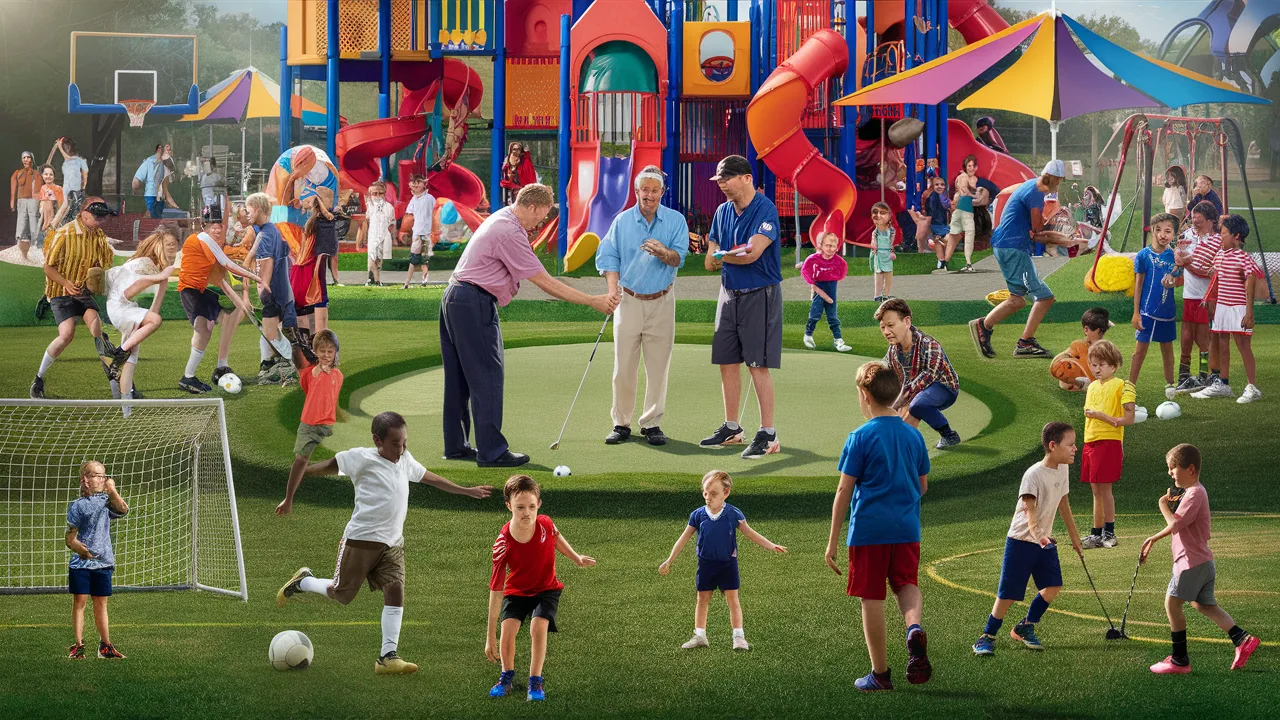
One of the more noticeable aspects of Bogeys Sports Park is how naturally it accommodates different types of groups.
Families tend to move through it in a very organic way. Children usually lead the energy, pulling adults into participation without much resistance. Parents often start by observing, then slowly get involved. There’s no formal instruction needed, which removes a lot of hesitation.
Friends, on the other hand, bring a different kind of energy. More teasing, more spontaneous competition, more laughter that doesn’t need context. But even then, nothing feels intense or forced.
Interestingly, there’s very little separation between groups. Families, friends, couples—all seem to exist in the same shared rhythm without conflict. That’s not always easy to achieve in public recreational spaces.
One small but telling observation: people stay longer than expected. Not because they planned to, but because leaving doesn’t feel urgent. The space doesn’t push them out emotionally. It just holds them gently.
In many ways, Bogeys Sports Park functions less like a venue and more like a social backdrop. The real event is not the activity—it’s the interaction happening around it.
Why People Keep Coming Back
Repeat visits rarely happen because of one standout feature. Bogeys Sports Park doesn’t seem to rely on a single attraction or highlight. Instead, it builds a kind of familiarity that doesn’t become boring.
People return because it’s easy. Not easy in the sense of simple design, but easy in emotional terms. There’s no preparation needed, no expectation, no pressure to “make the most” of the visit. You just go, and things unfold naturally.
That said, there’s also variety in repetition. Each visit feels slightly different depending on who you go with, how busy it is, or even your own mood that day. The environment doesn’t change dramatically, but your experience of it does.
A regular visitor might put it simply: “It’s just our default place when we don’t want to overthink plans.”
And that “default” role is more powerful than it sounds. Not everything needs to be special to be valuable. Some places just need to be reliably comfortable.
Role in Modern Entertainment Lifestyle
Bogeys Sports Park fits into a larger shift that’s quietly reshaping how people define leisure.
There was a time when entertainment was either passive or highly structured. You either watched something, or you followed rules in a specific activity. But now, there’s a growing middle space—experiences that are flexible, social, and lightly active.
This middle space is becoming more important than it first appears.
People are spending more time in environments where they can switch between activity and rest without planning it in advance. And venues like Bogeys Sports Park align perfectly with that behavior.
What’s also changing is the definition of “going out.” It doesn’t always mean something big anymore. Sometimes it just means going somewhere where you feel present without obligation.
Bogeys Sports Park reflects that shift without trying to define it. It simply exists within it.
In many ways, it represents a softer form of entertainment. Less about spectacle, more about shared time.
Future of Such Sports Parks
Looking ahead, spaces like Bogeys Sports Park will likely continue evolving, but not necessarily in dramatic ways.
The core idea—flexible, low-pressure social recreation—already feels stable. If anything, future versions may refine how smoothly people move between experiences or how comfortably different group types coexist.
There’s also a broader possibility that these kinds of spaces become more central in community life, especially as digital interaction continues to dominate everyday communication. Physical social spaces don’t disappear; they just become more valuable.
That said, the challenge will always be balance. Too structured, and the space loses its freedom. Too loose, and it loses its identity. Bogeys Sports Park seems to sit somewhere in the middle, which is probably why it works.
And maybe the future isn’t about making it more complex, but keeping that balance intact.
Frequently Asked Questions
What is Bogeys Sports Park?
It’s a recreational space designed for casual sports, social interaction, and relaxed group activities.
Is it a competitive sports venue?
Not really. The focus is more on casual participation than structured competition.
Who usually visits Bogeys Sports Park?
Families, friend groups, and casual visitors looking for an easy-going outing.
Do you need skills to participate?
No, most activities are designed to be accessible to everyone.
Why do people like it?
Because it offers a flexible, low-pressure environment where people can spend time socially without planning too much.
Conclusion
Bogeys Sports Park doesn’t try to define itself loudly, and maybe that’s why it works. It exists in a space that feels familiar yet slightly different from traditional recreational venues. Not too structured, not too loose. Just balanced enough for people to find their own rhythm inside it.
And when you leave, you don’t usually remember a single moment. You remember the feeling of it—the ease, the movement, the lack of pressure. A place where time didn’t demand anything from you for a while.